
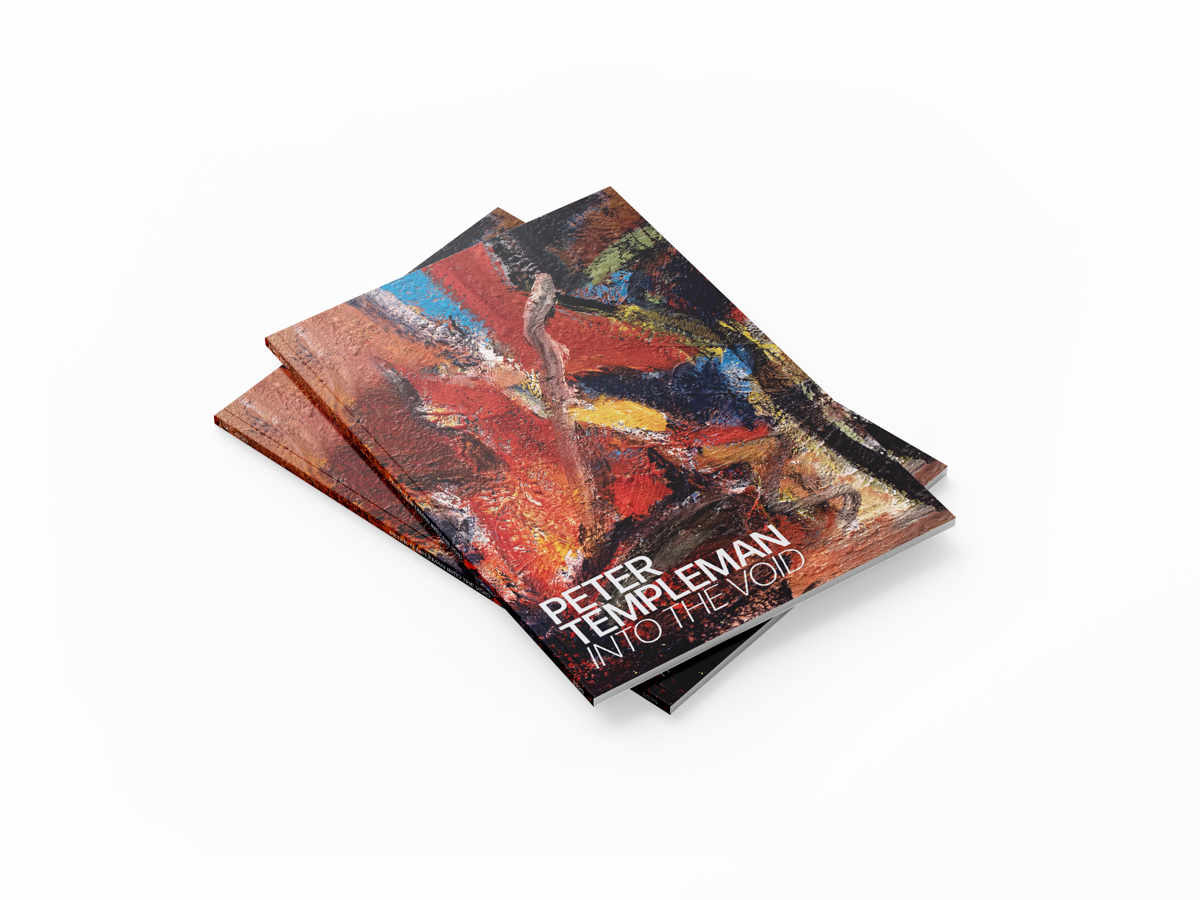
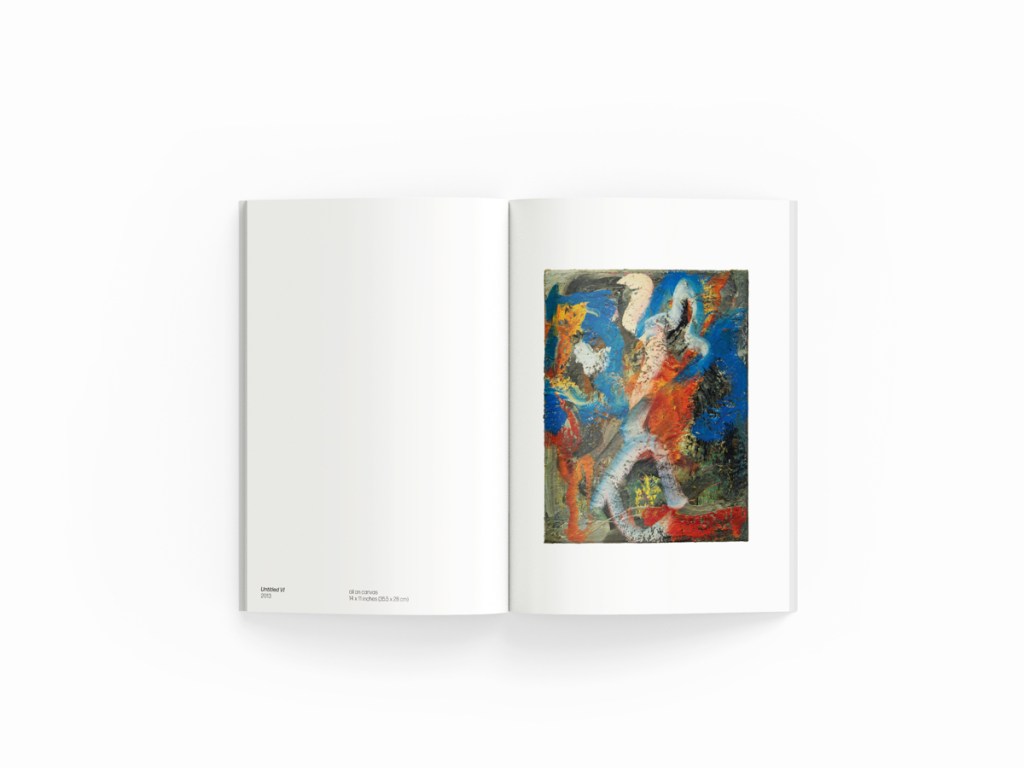
The following is an excerpt from “Peter Templeman – Into the Void” by Rawish Talpur, a book offering an intriguing glimpse into Peter Templeman’s life and career, detailing the artist’s experiences as part of Toronto’s vibrant art scene since the 1970s.
In 1972, seventeen–year–old Peter Templeman was one of many bright–eyed art students who clambered aboard a yellow school bus at Humber College, bound for Graham Coughtry’s studio. When they reached the building on Spadina Avenue, the class climbed a long, narrow staircase and were immediately hit with the smell of oil paint, turpentine, and incense. They entered the studio to see the artist and his friends lounging on a couch, sipping wine, cats roaming the floor around them, and jazz playing over the stereo. At the far end of the room stood an enormous canvas, ablaze with figures emerging and submerging in cascades of fiery oranges and cool blues.
The scene was a living vision of the world from the glossy pages of Arts Canada. Peter soaked up the sights and smells with the fervour of a 19th–century romantic, the likes of Gidel, Rimbaud, Baudelaire, and Poe, and swore to himself that this was how he was going to live.
Templeman credits his painting studies at Humber for connecting him with many artists, as peers and mentors, including Coughtry himself, who later became a guest instructor — the memory of the studio visit was still vivid in Templeman’s mind when one early morning before class Coughtry casually asked, “Want to smoke a joint?”
“Sure,”
“Well, put your lead boots on!”
After only a year of commuting to school from his family’s home in Port Credit, Peter craved complete immersion into Toronto’s art scene. With a student loan in his pocket and a gentle nudge from one of his teachers, Templeman dropped out of school, moved to the city, and began working as an artist.
He found studio space in a now–demolished building at King and Bathurst, rented out by sculptor May Marx. Below, a furniture factory hummed, and above, industrial floors had been carved into artist studios. Templeman took a small space with a red fridge, paint–streaked walls, and a single window, for $200 a month. The studio had once belonged to David Bolduc, and at some point, even Harold Ballard’s (then owner of the Toronto Maple Leafs) son — the story goes that Ballard would invite hockey players to the studio to shoot pucks at paint–filled balloons, splattering the walls with colour.
This studio was a world apart from his first — his parents’ boiler room, where “no one had to hear him making art.”
Templeman’s creative journey began in his parents’ home, where he would often lock himself in isolation to write, draw, and paint as a form of escape and self–expression, particularly to overcome the challenges of his childhood stutter. It was a way of coping with childhood trauma, family struggles, and an educational system that didn’t accommodate his needs. He pushed himself to write more, and speak more, to overcome his speech impediment — which slowly, unbeknownst to him at the time, made way to an almost surrealist, automatic approach to writing. That fascination with surrealism, spurred by artists like Dali and Breton, helped him tap into his emotions, and he found solace in transmuting his subconscious into fantastical landscapes, inspired by scenes from his earliest memories. These explorations weren’t about technique, they were about processing his frustrations and insecurities.
I write with clarity and care. I have experience writing compelling press releases, thoughtful artist biographies, and detailed essays. My writing centers the artist’s voice while offering context that’s thoughtful and clear (no artspeak here).

 Rawish Talpur