
The following is an excerpt from “Ray Mead – Life is Change” by Rawish Talpur, a book about the life and career of one of Canada’s most important abstract painters.
“Judyan and Deirdre were at home when he died. They couldn’t watch their once larger–than–life father, the passionate artist, the no–nonsense intellectual, the war veteran, and the accomplished ad man, spending his final days in a hospital bed. The man who they watched speak unfiltered, holding his own against critics in both his professional and personal life, who spent hours in his home studios after long days in the office, wrestling with his canvases, the man who never liked to speak about his past. The same man who cooked for them every day, dressed up as Santa on Christmas, made up bedtime stories instead of reading them, adopted science class chicks as house pets, and who spoiled — and bickered with — his cat as much as he did his kids. He traded in a potential New York art career for daily train rides through chilly Canadian mornings, donning his grey flannel uniform as he slipped into the world of advertising to provide for his family.
He could be stern when deep in focus, and if he was in his studio, they knew not to interrupt. His home studio was his one sanctuary where he could retreat from the heavy isolation he felt as a British immigrant in Quebec. But now and then, he would invite his daughters in, and they would perch on a small chair facing the canvas, eyes wide, breath held. “What do you see?” he’d ask. “Where does your eye go?” He was testing the work’s rhythm, its pull, whether it conveyed the story he wanted to tell. He always challenged them, encouraged them to think critically, to swim farther, to observe more closely, and to always bring something meaningful to the table – even if that meant talking politics at dinner. He respected their ideas even as children, and in turn, as unsupported as he may have felt (despite his many artistic accomplishments and awards in advertising), he knew he undoubtedly had admirers in his daughters.
Nothing could have prepared them for the moment they learned he’d been hospitalized after a sudden fall one Labour Day weekend. And when they arrived at the hospital, the familiar sharpness of his British wit had already given way to shallow, laboured breaths. Perhaps no one is ever truly ready to lose a parent, but when they were told to expect the worst, they were unmoored. They were at home with their families when the news came, just a week later. He was gone. They were bereft, forced to suddenly contend with the shock of their father — a presence once strong and steady, if enigmatic — being taken from them without warning.
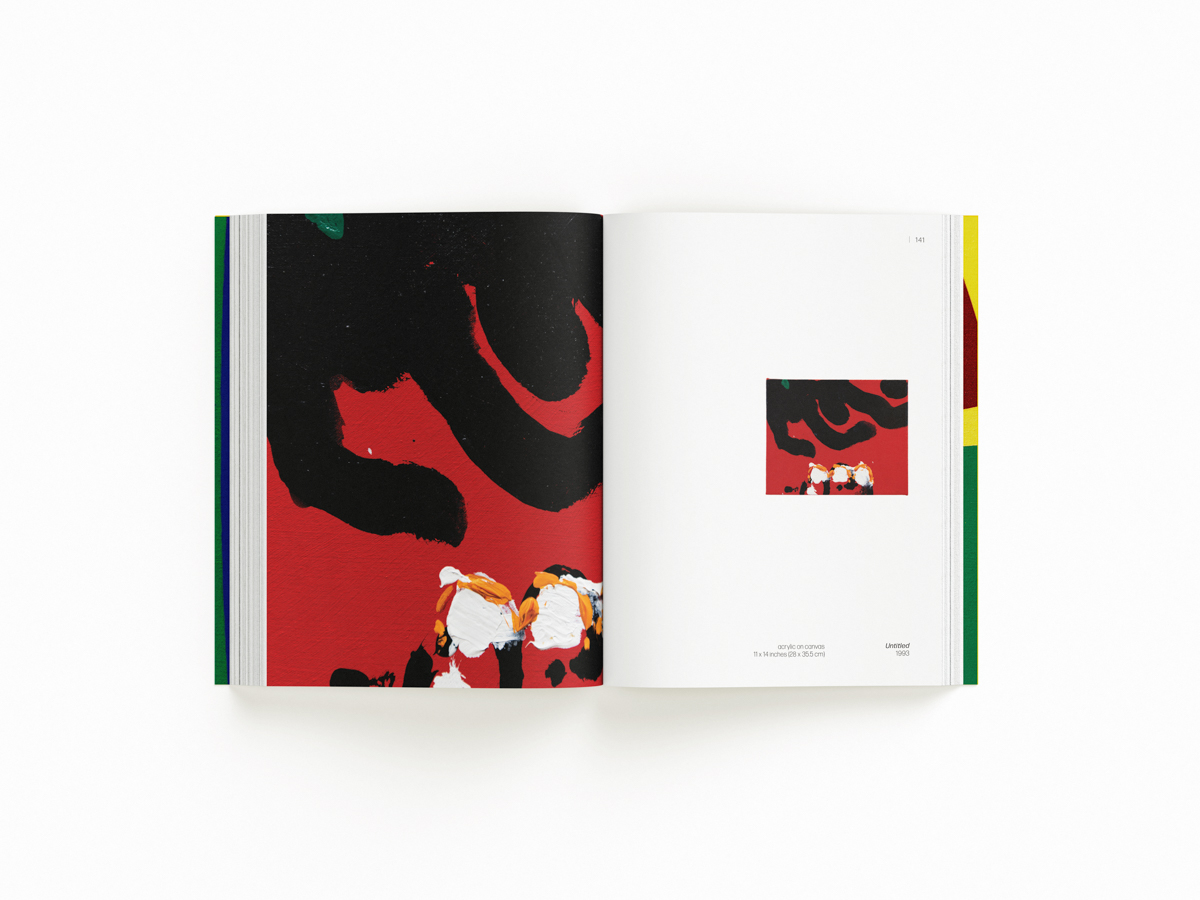
In the nearly three decades since Ray Mead’s death, his daughters, Judyan Mead and Deirdre Litt, have spent considerable time and energy in preserving his memory, celebrating his work, and protecting his legacy. This book was made in conversation with the sisters, who, through fields of colour and elegant marks on canvas, can see the vivid trace of the life their father lived. After losing him so abruptly, they want to ensure that the story threaded through his work, and the remarkable character behind it, is never dimmed or forgotten.”
I write with clarity and care. I have experience writing compelling press releases, thoughtful artist biographies, and detailed essays. My writing centers the artist’s voice while offering context that’s thoughtful and clear (no artspeak here).

 Rawish Talpur